How to Choose the Right Size Sauna for Your Home
Sauna size is the decision most buyers spend the least time on — and the one they're most likely to regret.
The most common piece of feedback we hear from sauna owners? They wish they'd gone bigger.
Here's how to think through it properly before you buy.
Start With How You'll Actually Use It
Before you measure anything, ask yourself a few honest questions:
- Will this mostly be a solo experience, or will you use it with a partner or family?
- Do you like to stretch out, or are you comfortable in a more compact space?
- Is this primarily for relaxation, recovery, or both?
- How often do you realistically plan to use it?
If you're buying a sauna for daily solo recovery sessions, a 1-person unit is efficient and plenty. If there's any chance you'll want to share it — or if you simply like having room to move — size up.
Understanding Sauna Capacity Ratings
Sauna capacity ratings (1-person, 2-person, 3-person) refer to the number of people who can sit in the unit simultaneously. They're useful as a starting point, but the experience inside varies significantly.
A 1-person sauna is cozy by design — think of it as a personal pod. You'll sit upright with your back against the heating panel and limited room to shift positions.
A 2-person sauna gives you meaningful extra space. You can stretch your legs, shift positions, or share the session comfortably without feeling cramped.
A 3-person sauna is where it starts to feel genuinely spacious. Full bench length, room to lie down, and the ability to host a proper group session.
Measuring Your Space
For indoor saunas, measure carefully before you order. Key considerations:
- Ceiling height: Most infrared saunas require at least 7 feet of clearance. Check the product specs and compare to your actual ceiling height.
- Doorway width: Your sauna will arrive as a kit, but the panels still need to fit through your door. Most standard interior doors are 32–36 inches wide — verify before ordering.
- Floor space: Leave at least 6–12 inches of clearance around the unit for ventilation and access to the control panel.
For outdoor saunas, the space constraints are more forgiving — but you'll still want a level surface (concrete, pavers, or a deck) and enough clearance from fences or structures for the door to swing open freely.
Infrared vs. Outdoor: Size Feels Different
One thing worth knowing: infrared saunas and outdoor barrel saunas feel very different at the same stated capacity.
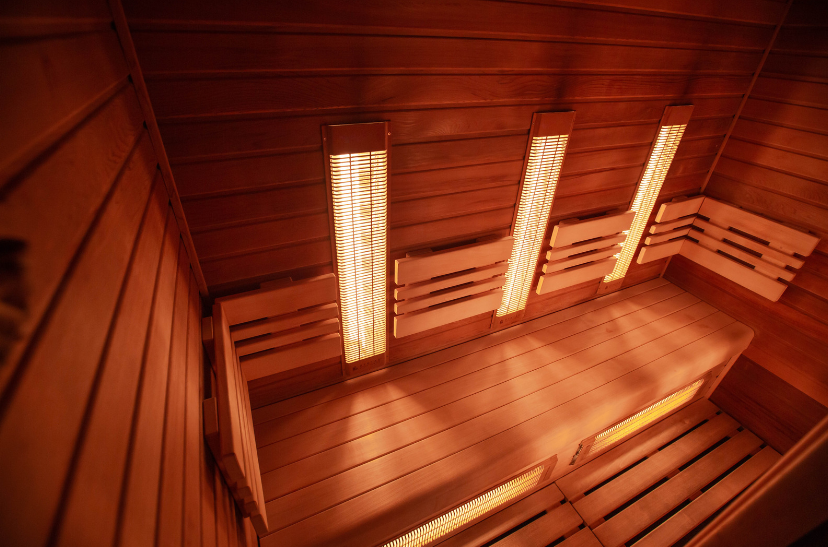
Infrared saunas have lower ceilings and a more enclosed feel by design — the proximity to the heating panels is part of how they work. An outdoor cedar cabin sauna at the same capacity feels dramatically more open, with higher ceilings, natural wood walls, and often a panoramic glass door that connects you to the outside.
If you're someone who feels claustrophobic in tight spaces, lean toward an outdoor sauna or size up on your infrared model.
Our Recommendation
When in doubt, go one size larger than you think you need. The price difference between a 1-person and 2-person sauna is relatively small. The difference in how much you'll enjoy it — especially a year or two in — is not.
Still unsure? Contact our team and we'll help you figure out the right fit for your space and your lifestyle.